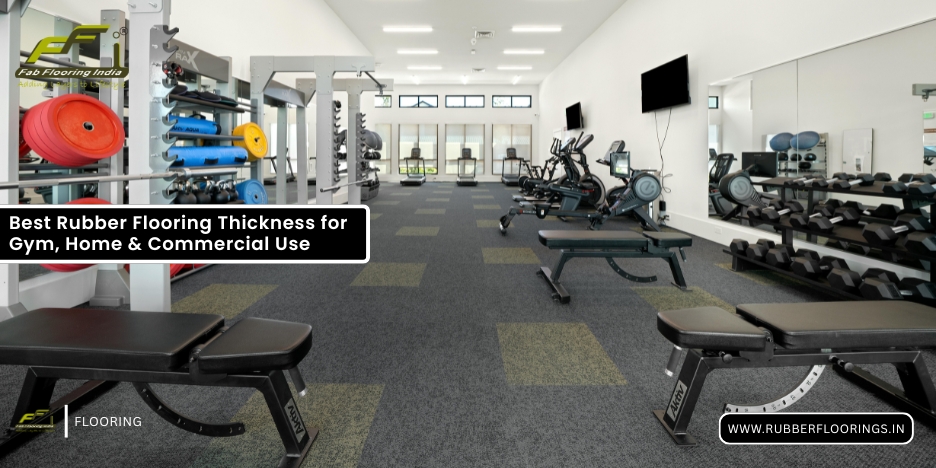
What Thickness Rubber Flooring is Best for Gym, Home, and Commercial Use? Complete Guide
Rubber flooring has become the most preferred flooring solution for gyms, fitness studios, and home workout spaces across India. It provides durability, safety, comfort, and long-term floor protection. However, one of the most important factors to consider when choosing rubber flooring is thickness.
The thickness of rubber flooring directly affects its ability to absorb impact, protect the subfloor, reduce noise, and ensure safety during workouts. Whether you are setting up a home gym, commercial fitness center, or professional training facility, selecting the correct thickness is essential for long-term performance and protection.
This guide explains the ideal rubber flooring thickness for different applications, including home gyms, commercial gyms, cardio areas, and weightlifting zones.
Why Rubber Flooring Thickness is Important
Rubber flooring thickness plays a key role in determining durability, comfort, and safety. Thicker rubber flooring provides better shock absorption and protects the underlying floor from heavy equipment and dropped weights.
If the flooring is too thin, it may wear out quickly or fail to protect the subfloor. Proper thickness ensures:
-
Better impact absorption
-
Improved safety during workouts
-
Protection of original flooring
-
Noise and vibration reduction
-
Longer flooring lifespan
Choosing the correct thickness helps prevent damage to floors and equipment while improving overall workout experience.
Common Rubber Flooring Thickness Options and Their Uses
Rubber flooring is available in different thickness levels depending on usage and application.
4mm to 6mm Rubber Flooring – Best for Light Use
This thickness is suitable for low-impact activities and light workouts.
Ideal for:
-
Yoga and stretching areas
-
Home workout zones without heavy equipment
-
Cardio machines like exercise bikes
It provides basic floor protection but is not suitable for weightlifting.
8mm Rubber Flooring – Ideal for Home Gyms
8mm rubber flooring is one of the most popular options for home gyms. It offers a good balance between protection, comfort, and cost.
Suitable for:
-
Home gyms
-
Treadmills and cardio equipment
-
Moderate strength training
It provides sufficient cushioning and protects floors from damage caused by gym equipment.
10mm to 12mm Rubber Flooring – Best for Strength Training
This thickness is ideal for moderate to heavy workouts and strength training.
Suitable for:
-
Home gyms with weight training
-
Fitness studios
-
Personal training areas
It offers better durability and shock absorption compared to thinner flooring.
15mm to 20mm Rubber Flooring – Suitable for Commercial Gyms
This is heavy-duty rubber flooring designed for commercial use.
Suitable for:
-
Commercial gyms
-
Strength training areas
-
Free weight zones
-
Functional training areas
This thickness protects floors from heavy impact and ensures long-term durability.
20mm to 30mm Rubber Flooring – Best for Heavy Weightlifting and CrossFit
This thickness is recommended for high-impact and professional training environments.
Suitable for:
-
CrossFit gyms
-
Olympic weightlifting areas
-
Professional training facilities
It provides maximum protection and durability.
Recommended Rubber Flooring Thickness for Home Gym
Home gyms require flooring that protects the floor while providing comfort.
Recommended thickness:
-
6mm to 8mm – Light workouts
-
8mm to 12mm – Standard home gym
-
12mm to 15mm – Heavy lifting
Most home gyms benefit from 8mm to 12mm thickness, as it provides sufficient protection and comfort.
Recommended Thickness for Commercial Gym Flooring
Commercial gyms experience heavy foot traffic and equipment usage.
Recommended thickness:
-
10mm to 15mm – General workout areas
-
15mm to 20mm – Strength training zones
-
20mm to 30mm – Heavy lifting areas
This thickness ensures safety and durability.
Recommended Thickness for Cardio Equipment
Cardio equipment such as treadmills and bikes requires moderate thickness.
Recommended thickness:
-
6mm to 10mm
This thickness protects floors and reduces vibration.
Recommended Thickness for Weightlifting Areas
Weightlifting involves heavy weights and requires thicker flooring.
Recommended thickness:
-
Minimum: 12mm
-
Ideal: 15mm to 25mm
This thickness protects floors from heavy impact.
Recommended Thickness for Fitness Studios and Yoga Areas
Fitness studios require comfortable and durable flooring.
Recommended thickness:
-
6mm to 10mm – Yoga and light workouts
-
10mm to 15mm – Functional training
This thickness provides comfort and safety.
Benefits of Choosing the Right Rubber Flooring Thickness
Selecting the correct thickness offers multiple benefits.
Floor Protection
Rubber flooring protects original flooring from cracks, dents, and scratches.
Shock Absorption
It absorbs impact from dropped weights and equipment.
Noise Reduction
Rubber flooring reduces noise and vibration.
Improved Safety
It provides anti-slip surface and reduces injury risk.
Longer Lifespan
Proper thickness ensures durability and long-term performance.
Factors to Consider When Selecting Rubber Flooring Thickness
Several factors affect thickness selection.
Type of Workout
Heavy lifting requires thicker flooring.
Equipment Weight
Heavier equipment needs thicker protection.
Usage Frequency
Commercial gyms require thicker flooring than home gyms.
Floor Type
Delicate floors require thicker rubber mats.
Rubber Flooring Formats Available
Rubber flooring is available in different formats.
Rubber Rolls
Ideal for large areas and commercial gyms.
Rubber Tiles
Easy to install and replace.
Interlocking Mats
Suitable for home gyms.
Heavy-Duty Rubber Mats
Ideal for strength training areas.
Different formats allow flexibility depending on gym size and requirements. Many manufacturers offer these options in various thickness levels to suit different applications. For example, suppliers such as fabflooringsindia.com provide rubber flooring rolls, tiles, and heavy-duty mats designed for home gyms, fitness studios, and commercial gym environments.
Installation Tips for Rubber Flooring
Follow these tips for best results:
-
Install on flat surface
-
Clean floor before installation
-
Choose correct thickness
-
Measure area accurately
Proper installation improves durability.
Maintenance Tips for Rubber Gym Flooring
Rubber flooring requires minimal maintenance.
Maintenance tips:
-
Sweep regularly
-
Mop occasionally
-
Avoid harsh chemicals
Proper maintenance ensures long lifespan.
Long-Term Benefits of Rubber Flooring
Rubber flooring provides excellent long-term value.
Benefits include:
-
Durable and long-lasting
-
Protects original flooring
-
Improves safety
-
Reduces maintenance costs
It is one of the best flooring investments.
Conclusion
Choosing the correct rubber flooring thickness is essential for safety, durability, and performance. Home gyms typically require 8mm to 12mm thickness, while commercial gyms require 10mm to 30mm thickness depending on workout intensity.
Thicker flooring provides better protection, comfort, and durability. Investing in the right thickness ensures long-term performance and safety.
Rubber flooring remains the best flooring solution for home gyms, commercial gyms, and fitness studios due to its strength, shock absorption, and reliability.