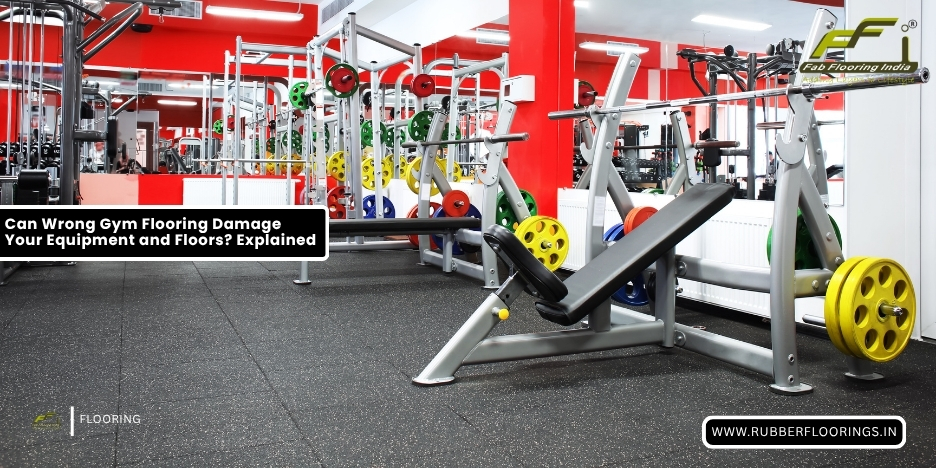
Can Wrong Gym Flooring Damage Your Equipment and Floors? Explained
When setting up a gym, most people invest heavily in high-quality equipment—dumbbells, barbells, machines, racks, and cardio systems. However, one critical factor that is often ignored is gym flooring.
Many gym owners assume that flooring is just a surface to stand on. In reality, it plays a crucial role in protecting both your equipment and the underlying floor structure.
The wrong gym flooring can lead to serious damage, costly repairs, safety risks, and reduced equipment lifespan.
In this detailed guide, we’ll explain how incorrect flooring choices can damage your gym, why it happens, and how to avoid these costly mistakes.
Why Gym Flooring Matters More Than You Think
Every activity in a gym creates force:
- Dropping weights
- Running on treadmills
- Jumping exercises
- Equipment vibrations
This force needs to be absorbed and distributed properly.
Without the right flooring:
- Impact goes directly to the subfloor
- Equipment absorbs shock
- Noise and vibration increase
Gym flooring acts as a protective buffer layer.
How Wrong Gym Flooring Damages Equipment
1. Increased Impact Stress on Equipment
When weights are dropped on hard or low-quality flooring:
- There is no shock absorption
- Impact force returns to the equipment
What Happens?
- Barbells bend over time
- Weight plates crack
- Equipment joints weaken
This significantly reduces equipment lifespan.
2. Surface Damage to Equipment
Hard surfaces like tiles or concrete cause direct impact damage.
Common Issues
- Scratches on equipment
- Cracked plates
- Damaged machine bases
Rubber flooring prevents direct contact and acts as a cushion.
3. Equipment Instability
Wrong flooring can be:
- Uneven
- Too soft
- Slippery
Result
- Equipment shifts during use
- Loss of balance
- Increased accident risk
Stability is essential for safe workouts.
4. Increased Wear and Tear
Continuous friction between equipment and poor flooring leads to:
- Faster degradation
- Loose components
- Reduced performance
Quality flooring minimizes wear.
How Wrong Gym Flooring Damages Floors
1. Cracks in Concrete and Tiles
Without proper flooring, heavy impact directly hits the subfloor.
Result
- Cracked tiles
- Broken concrete
- Structural damage
Repairing floors is expensive.
2. Permanent Indentations
Heavy equipment can leave marks on weak flooring.
Common Problems
- Dents in tiles
- Compressed surfaces
- Uneven flooring
This affects both appearance and safety.
3. Damage to Wooden Floors
Wooden floors are especially vulnerable.
Issues
- Scratches
- Cracks
- Warping
Rubber flooring is essential for protection.
4. Vibration Damage
Gym equipment creates vibrations that travel through the building.
Without Proper Flooring
- Structural stress increases
- Noise complaints arise
- Floor joints weaken
Rubber flooring absorbs vibrations effectively.
Role of Shock Absorption in Protection
Shock absorption is the most important feature of gym flooring.
How It Works
- Flooring compresses under impact
- Absorbs energy
- Reduces force transfer
Benefits
- Protects equipment
- Protects subfloor
- Reduces injury risk
Rubber flooring is best for shock absorption.
Real-Life Example
Gym Without Proper Flooring
- Cracked tiles
- Damaged dumbbells
- High noise levels
Gym With Rubber Flooring
- Protected floor
- Stable equipment
- Reduced noise
The difference is significant.
Common Mistakes That Cause Damage
Using Thin Flooring
Thin mats cannot absorb heavy impact.
Using EVA Foam for Heavy Lifting
Foam compresses and fails under weight.
Installing Flooring on Uneven Surface
Leads to instability and damage.
Choosing Cheap Flooring
Low-quality materials fail quickly.
These mistakes increase long-term costs.
Why Rubber Flooring Is the Best Solution
Rubber flooring is widely used in gyms for a reason.
Key Benefits
- High durability
- Excellent shock absorption
- Anti-slip surface
- Noise reduction
- Long lifespan
It protects both equipment and floors effectively.
Recommended Flooring Thickness
Thickness Guide
- 6mm–8mm → Light workouts
- 10mm–12mm → General use
- 15mm–20mm → Strength training
- 20mm+ → Heavy lifting
Thicker flooring = better protection.
Importance of Zoned Flooring
Different areas require different flooring.
Example
- Cardio → 8mm
- Strength → 12mm
- Deadlift → 20mm+
This approach improves efficiency and protection.
Long-Term Cost Impact
Wrong Flooring
- Frequent repairs
- Equipment damage
- Higher maintenance
Correct Flooring
- Long lifespan
- Lower repair costs
- Better performance
Investing in quality saves money.
Tips to Avoid Flooring Mistakes
Choose High-Density Rubber Flooring
Density is more important than thickness.
Work With Experienced Suppliers
They guide proper selection.
Test Flooring Before Buying
Check durability and grip.
Plan Layout Properly
Use zoned flooring strategy.
Final Verdict
Yes, wrong gym flooring can seriously damage both equipment and floors.
It leads to:
- Equipment wear
- Floor damage
- Safety risks
- Higher long-term costs
The right flooring acts as a protective system.
Conclusion
Gym flooring is not just a surface—it is a critical investment that protects your equipment, your building, and your users.
Choosing the wrong flooring can lead to costly damage and safety issues. On the other hand, selecting high-quality rubber flooring ensures durability, stability, and long-term performance.
In the end, the right flooring doesn’t just support your gym—it protects your entire investment.