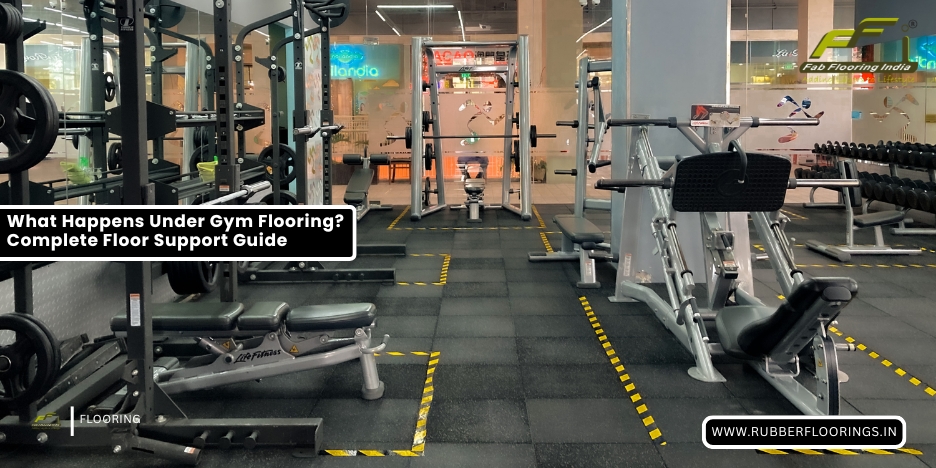
What Happens Under Your Gym Flooring? Understanding Floor Support Systems
When people plan a gym setup, most of the attention goes to equipment, layout, and the visible flooring surface. However, one of the most important parts of gym performance is something most people never see:
What exists underneath the gym flooring.
No matter how expensive or durable the top flooring appears, the overall performance of a gym floor depends heavily on the floor support system below it.
The support system affects:
- Stability
- Shock absorption
- Equipment protection
- Noise control
- Load distribution
- Flooring lifespan
In this guide, we’ll explain what happens under gym flooring, how floor support systems work, and why they are critical for long-term performance.
What is a Gym Floor Support System?
A gym floor support system refers to the layers installed underneath the visible gym flooring surface.
These layers work together to:
- Support equipment weight
- Reduce impact
- Protect the building floor
- Improve user comfort
The flooring you see is only one part of the complete system.
Understanding the Layers Under Gym Flooring
Most professional gym flooring systems include multiple layers.
Base Structural Floor
This is the original building surface.
Common examples:
- Concrete
- Tiles
- Marble
- Wooden flooring
This layer supports the entire gym structure.
Role of Base Floor
- Structural support
- Load carrying
- Foundation stability
Subfloor Layer
The subfloor sits above the building floor and creates a smooth, stable surface.
Its purpose is to:
- Correct uneven areas
- Improve support
- Prevent flooring movement
Common Subfloor Materials
- Concrete leveling compounds
- Plywood systems
- Cement boards
A strong subfloor improves overall gym performance.
Moisture Barrier Layer
This layer protects flooring from moisture coming from below.
Why It Matters
Without moisture protection:
- Adhesives weaken
- Mold may develop
- Flooring lifespan decreases
This becomes especially important in humid environments.
Cushioning or Shock Absorption Layer
This layer absorbs impact before it reaches the subfloor.
Functions
- Reduces vibration
- Protects joints
- Minimizes equipment impact
Common materials include:
- Rubber underlay
- Foam support layers
- Acoustic systems
Top Gym Flooring Surface
This is the visible flooring people walk and train on.
Common options:
- Rubber flooring
- PVC flooring
- Interlocking tiles
- Sports flooring
This layer provides:
- Grip
- Durability
- Workout comfort
Why Floor Support Systems Matter
Many flooring problems start underneath the visible surface.
Better Load Distribution
Gym equipment creates concentrated pressure.
Examples:
- Power racks
- Dumbbell zones
- Treadmills
Support systems spread weight more evenly.
This prevents:
- Cracks
- Dents
- Structural stress
Improved Shock Absorption
During exercise:
- Weights drop
- Feet impact the floor
- Equipment vibrates
The support system absorbs and distributes energy.
This reduces:
- Joint stress
- Equipment damage
- Floor wear
Noise and Vibration Reduction
Gym environments generate:
- Impact noise
- Machine vibration
Support layers reduce transmission through the building.
This is especially useful for:
- Apartments
- Commercial buildings
- Multi-floor facilities
Longer Flooring Lifespan
Support systems reduce stress on the flooring surface.
This helps:
- Prevent early wear
- Improve durability
- Reduce maintenance
Different Types of Gym Floor Support Systems
Direct Installation System
In this method:
- Gym flooring is installed directly on the base floor
Benefits
- Lower cost
- Faster installation
Limitations
- Less shock absorption
- Lower acoustic performance
Floating Floor System
A floating system adds cushioning beneath the flooring.
Benefits
- Better impact control
- Improved comfort
- Reduced vibration
Popular in premium gyms.
Raised Floor Support System
This system uses elevated support structures.
Benefits
- Better equipment support
- Advanced acoustic control
Common in high-end sports facilities.
How Equipment Changes Floor Requirements
Different equipment requires different support levels.
Cardio Zones
Equipment:
- Treadmills
- Bikes
- Ellipticals
Needs:
- Vibration control
- Stability
Weightlifting Areas
Equipment:
- Barbells
- Dumbbells
Needs:
- High shock absorption
- Load distribution
Functional Training Zones
Activities:
- Jumping
- HIIT
Needs:
- Flexible support
Importance of Flooring Thickness
Support performance changes with thickness.
6mm–8mm
Suitable for:
- Light workouts
10mm–12mm
Suitable for:
- General gym usage
15mm–20mm
Suitable for:
- Strength training
20mm+
Suitable for:
- Heavy lifting zones
Thickness should match gym activity.
Why Density Matters More Than Thickness
Many people focus only on thickness.
However:
High-Density Flooring
- Better support
- Less compression
- Improved durability
Low-Density Flooring
- Excess movement
- Faster wear
Density often determines long-term performance.
Common Problems Caused by Poor Floor Support
Uneven Flooring
Weak support causes movement.
Cracks and Surface Damage
Poor load handling damages flooring.
Equipment Instability
Machines may become unstable.
Noise Problems
Insufficient support increases sound transmission.
Faster Wear and Tear
Flooring deteriorates more quickly.
How to Build a Better Gym Floor System
Start with Proper Subfloor Preparation
A smooth base improves performance.
Choose Appropriate Underlay
Match support to workout style.
Use High-Density Flooring
Better durability and load management.
Plan Different Workout Zones
Different zones need different support levels.
Ensure Professional Installation
Installation quality affects long-term results.
Commercial vs Home Gym Support Systems
Home Gyms
Focus on:
- Noise reduction
- Floor protection
- Easy installation
Commercial Gyms
Require:
- Heavy load support
- Durability
- Advanced impact control
Different environments need different approaches.
Real-Life Comparison
Flooring Without Support System
- More vibration
- Faster damage
- Higher maintenance
Result:
- Reduced lifespan
Flooring With Proper Support System
- Stable performance
- Better comfort
- Long-term durability
Result:
- Improved gym experience
Common Mistakes to Avoid
- Installing flooring directly on uneven surfaces
- Ignoring subfloor preparation
- Choosing thin flooring for heavy equipment
- Focusing only on appearance
These mistakes reduce flooring performance significantly.
Final Verdict
Gym flooring performance depends on more than the visible surface.
The support system underneath controls:
- Stability
- Shock absorption
- Noise reduction
- Equipment protection
- Long-term durability
Building the right foundation creates a better workout environment.
Conclusion
What happens under your gym flooring matters just as much as the flooring itself. A properly designed floor support system improves safety, comfort, performance, and durability while reducing maintenance and structural issues.
Whether building a home gym or a commercial fitness center, investing in the right support system creates a stronger and longer-lasting foundation.
A great workout starts from the ground up.