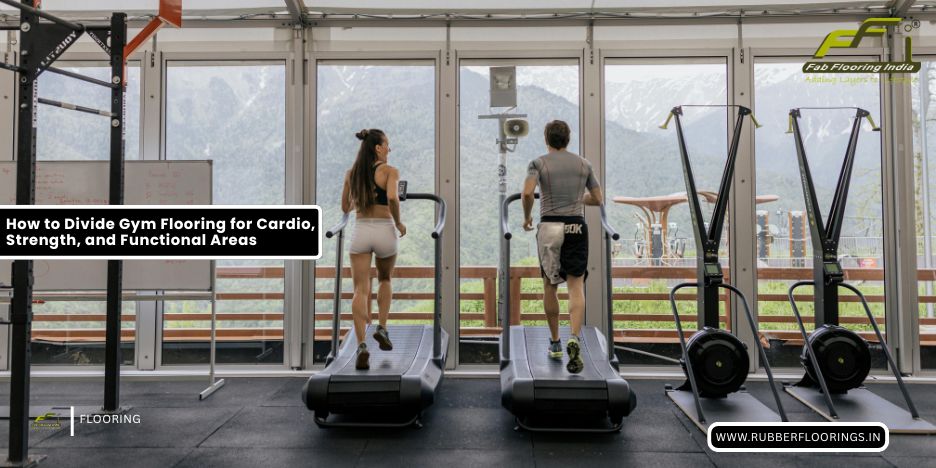
How to Divide Gym Flooring for Cardio, Strength, and Functional Areas
When setting up a gym, most owners focus on equipment, interiors, and memberships. However, one of the most important factors that directly affects safety, performance, and equipment lifespan is gym flooring. A well-planned flooring layout helps create designated workout zones, reduces maintenance costs, improves user experience, and enhances the overall appearance of the facility.
Whether you are planning a commercial gym, fitness studio, corporate fitness center, sports club, or home gym in India, dividing the flooring into dedicated cardio, strength, and functional training areas can significantly improve gym operations.
This guide explains how to divide gym flooring effectively and choose the right flooring materials for each workout zone.
Why Gym Flooring Zoning Matters
Different workout activities create different levels of impact, movement, and equipment load. Using the same flooring throughout the gym may lead to:
- Faster floor wear and tear
- Increased noise levels
- Equipment damage
- Safety risks for members
- Poor workout experience
By creating separate flooring zones, gym owners can:
- Improve member safety
- Protect expensive fitness equipment
- Reduce maintenance expenses
- Enhance gym aesthetics
- Increase workout efficiency
- Improve space utilization
Understanding the Three Main Gym Zones
Most modern gyms can be divided into three major workout areas:
1. Cardio Area
The cardio section typically includes:
- Treadmills
- Cross trainers
- Exercise bikes
- Rowing machines
- Stair climbers
- Spin bikes
This area experiences continuous foot traffic and machine vibration but relatively low impact compared to weightlifting sections.
2. Strength Training Area
The strength zone generally contains:
- Dumbbell racks
- Weight benches
- Plate-loaded machines
- Smith machines
- Power racks
- Cable crossover machines
Heavy weights and equipment generate significant pressure on the floor surface.
3. Functional Training Area
Functional fitness spaces often include:
- Battle ropes
- Kettlebells
- Sled pushes
- Agility drills
- HIIT workouts
- Cross-training exercises
- Bodyweight workouts
These areas require flooring that can absorb impact and provide superior grip.
Best Flooring for Cardio Areas
Flooring Requirements
Cardio zones require flooring that:
- Absorbs machine vibration
- Reduces noise
- Supports frequent movement
- Protects the subfloor
- Provides comfort for users
Recommended Flooring Options
Rubber Roll Flooring
Rubber rolls are one of the most popular choices for cardio sections because they provide:
- Excellent shock absorption
- Seamless appearance
- Easy maintenance
- Long lifespan
- Professional look
Rubber Floor Mats
Rubber mats are suitable for:
- Small gyms
- Fitness studios
- Home gyms
- Dedicated machine areas
Ideal Thickness
For most Indian gyms:
- 6 mm to 8 mm flooring for standard cardio machines
- 8 mm to 10 mm flooring for heavier commercial equipment
Best Flooring for Strength Training Areas
Flooring Requirements
Strength zones require flooring that can:
- Handle dropped weights
- Resist indentation
- Protect concrete surfaces
- Reduce impact noise
- Support heavy gym equipment
Recommended Flooring Options
Heavy-Duty Rubber Tiles
Rubber tiles are widely used because they offer:
- High durability
- Easy replacement
- Excellent shock absorption
- Strong load-bearing capacity
Interlocking Gym Tiles
Interlocking rubber tiles are ideal for:
- Commercial gyms
- Strength training sections
- Free-weight areas
Ideal Thickness
For strength training areas:
- 10 mm flooring for machine sections
- 15 mm flooring for moderate free-weight zones
- 20 mm or more for heavy lifting platforms
Best Flooring for Functional Training Areas
Flooring Requirements
Functional fitness workouts involve:
- Jumping
- Running
- Sprinting
- Agility drills
- Dynamic movement
The flooring must provide:
- Grip
- Cushioning
- Shock absorption
- Slip resistance
Recommended Flooring Options
Rubber Functional Training Flooring
This flooring is specifically designed for:
- Cross-training
- HIIT workouts
- Functional fitness programs
EPDM Rubber Flooring
EPDM flooring offers:
- Attractive colors
- High durability
- Outdoor and indoor applications
- Excellent comfort
Ideal Thickness
Most functional training zones perform well with:
- 10 mm to 15 mm rubber flooring
- 15 mm to 20 mm for high-impact activities
Suggested Gym Layout for Indian Fitness Centers
A practical gym layout can be divided as follows:
| Area | Space Allocation |
|---|---|
| Cardio Zone | 30% |
| Strength Zone | 45% |
| Functional Zone | 25% |
For example, a 5,000 sq. ft. gym can have:
- 1,500 sq. ft. Cardio Area
- 2,250 sq. ft. Strength Area
- 1,250 sq. ft. Functional Area
This distribution works well for most commercial gyms in India.
Color Coding Different Gym Zones
Using different flooring colors helps members identify workout areas quickly.
Suggested Color Combinations
Cardio Area
- Grey
- Blue
- Light Black
Strength Area
- Dark Black
- Charcoal Grey
Functional Area
- Green
- Blue
- Red
- Customized EPDM Colors
Benefits of color zoning include:
- Better navigation
- Improved aesthetics
- Professional gym appearance
- Enhanced branding opportunities
Common Mistakes Gym Owners Should Avoid
Using the Same Flooring Everywhere
Different workout areas require different levels of protection and performance.
Choosing Flooring Based Only on Price
Low-cost flooring often wears out quickly and increases replacement costs.
Ignoring Thickness Requirements
Insufficient flooring thickness can result in:
- Floor damage
- Excessive noise
- Equipment instability
Not Planning Future Expansion
Always consider future equipment additions when designing flooring zones.
Poor Installation
Improper installation can cause:
- Tile movement
- Uneven surfaces
- Safety hazards
Benefits of Proper Gym Flooring Division
When cardio, strength, and functional areas are clearly separated, gym owners experience:
Better Member Experience
Members can train comfortably in dedicated workout zones.
Improved Safety
Appropriate flooring reduces slips, falls, and impact injuries.
Longer Equipment Life
Correct flooring protects expensive gym machines and weights.
Reduced Noise Levels
Rubber flooring absorbs vibrations and impact sounds.
Professional Appearance
Well-defined zones make the gym look organized and premium.
How Indian Gym Owners Can Choose the Right Flooring
Before purchasing gym flooring, consider:
- Gym size
- Workout type
- Daily footfall
- Equipment weight
- Maintenance requirements
- Budget
- Future expansion plans
For most commercial gyms in India, a combination of:
- Rubber roll flooring for cardio zones
- Heavy-duty rubber tiles for strength areas
- Functional training flooring for HIIT and CrossFit spaces
provides the best balance of durability, safety, and cost-effectiveness.
Conclusion
Dividing gym flooring into dedicated cardio, strength, and functional training areas is one of the smartest investments for any fitness facility. Proper zoning improves safety, protects equipment, enhances member satisfaction, and creates a professional workout environment.
For Indian gym owners, selecting the right flooring thickness and material for each workout zone can significantly reduce maintenance costs while improving the overall performance and appearance of the gym. A carefully planned flooring layout not only supports current fitness needs but also prepares the facility for future growth and expansion.