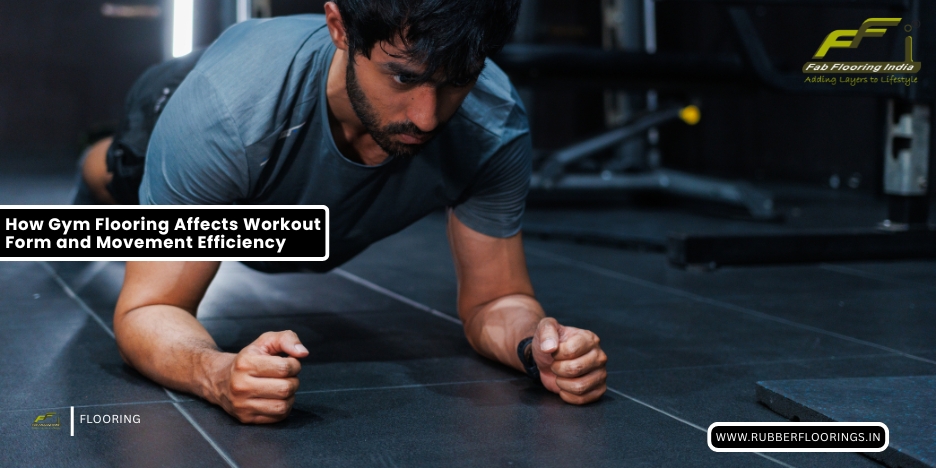
How Gym Flooring Influences Workout Form and Movement Efficiency
When people think about improving workout performance, they usually focus on equipment, training plans, nutrition, or workout intensity. However, one important factor that is often overlooked is gym flooring.
The surface you train on directly affects how your body moves, balances, absorbs force, and transfers energy during exercise.
Whether you are training in a commercial gym, home gym, fitness studio, or strength training facility, the right flooring can improve movement quality, reduce fatigue, and help maintain proper exercise form.
In this guide, we’ll explain how gym flooring influences workout form and movement efficiency and why choosing the right flooring matters more than most people realize.
Why Gym Flooring Matters More Than You Think
Gym flooring is not just installed to protect the floor underneath.
It affects:
- Stability
- Balance
- Joint support
- Force transfer
- Movement control
- Workout comfort
The wrong flooring may reduce workout quality and increase injury risk.
Understanding Workout Form and Movement Efficiency
Before understanding flooring impact, it is important to define these two concepts.
Workout Form
Workout form refers to:
- Correct body position
- Controlled movement
- Proper posture during exercise
Good form helps:
- Activate the correct muscles
- Reduce injury risk
- Improve exercise results
Movement Efficiency
Movement efficiency means how effectively your body produces and controls movement while using minimum unnecessary energy.
Efficient movement leads to:
- Better performance
- Improved endurance
- Reduced fatigue
How Gym Flooring Affects Stability
Stable flooring creates a strong foundation for movement.
When flooring moves excessively or compresses too much:
- Balance decreases
- Form becomes inconsistent
- Muscle activation changes
Example
During squats:
Stable flooring supports:
- Proper foot positioning
- Controlled force transfer
Unstable flooring may cause:
- Knee instability
- Reduced power output
Impact of Flooring on Force Transfer
Every exercise involves force.
Examples:
- Squats
- Deadlifts
- Running
- Jumping
The body produces force and transfers it into the floor.
Proper Force Transfer
Good flooring:
- Supports movement
- Maintains energy efficiency
Poor Force Transfer
Soft or unstable flooring:
- Absorbs excessive energy
- Reduces performance
This affects workout efficiency.
Role of Shock Absorption in Movement
Shock absorption is essential but must remain balanced.
Too Little Shock Absorption
Results in:
- Joint stress
- Higher impact
Too Much Shock Absorption
Results in:
- Energy loss
- Reduced stability
High-quality gym flooring creates the right balance.
How Flooring Influences Exercise Technique
Strength Training
Exercises:
- Squats
- Deadlifts
- Bench press
Require:
- Stable footing
- Minimal movement
Too-soft flooring reduces lifting efficiency.
Functional Training
Exercises:
- Lunges
- Agility drills
- HIIT workouts
Require:
- Controlled movement
- Grip and stability
Cardio Workouts
Exercises:
- Running
- Jumping
Require:
- Shock absorption
- Joint protection
Yoga and Stretching
Require:
- Comfortable support
- Controlled movement
Different workouts need different flooring characteristics.
Importance of Surface Grip
Grip directly affects movement quality.
Good Grip Improves
- Balance
- Confidence
- Movement control
Poor Grip Causes
- Slipping
- Compensation movements
- Reduced performance
High-quality gym flooring provides anti-slip performance.
How Flooring Influences Joint Alignment
Flooring affects how force travels through:
- Ankles
- Knees
- Hips
- Spine
Good flooring supports natural movement patterns.
Poor flooring may increase unnecessary stress.
Effect on Muscle Activation
The body constantly adjusts to the surface beneath it.
Stable Flooring
Encourages:
- Efficient muscle recruitment
- Better posture
Unstable Flooring
May force muscles to compensate unnecessarily.
This reduces exercise efficiency.
Flooring and Energy Conservation
Efficient movement requires controlled energy use.
Proper Gym Flooring
Helps:
- Reduce wasted energy
- Improve endurance
Poor Flooring
Causes:
- Extra stabilization effort
- Faster fatigue
This becomes more noticeable during long training sessions.
Why Rubber Flooring Performs Well
Rubber flooring is widely used because it balances:
- Stability
- Shock absorption
- Grip
- Durability
Benefits
- Supports natural movement
- Reduces impact
- Improves comfort
This makes rubber flooring suitable for most fitness environments.
Role of Flooring Thickness
Thickness affects movement efficiency.
6mm–8mm
Suitable for:
- Cardio
- Yoga
10mm–12mm
Ideal for:
- General gym use
15mm–20mm
Best for:
- Strength training
20mm+
Recommended for:
- Heavy lifting zones
Choosing correct thickness improves workout performance.
Importance of Flooring Density
Density affects stability.
High-Density Flooring
Benefits:
- Better support
- Controlled compression
- Stable movement
Low-Density Flooring
Problems:
- Excess sinking
- Reduced efficiency
Density often matters more than thickness.
Common Problems Caused by Wrong Gym Flooring
Reduced Stability
Body struggles to maintain position.
Faster Fatigue
More energy used for balance.
Poor Exercise Form
Movement patterns become inconsistent.
Increased Injury Risk
Joint and muscle stress increases.
Commercial Gym vs Home Gym Requirements
Commercial Gyms
Need flooring that handles:
- Heavy traffic
- Equipment load
- Continuous workouts
Home Gyms
Require:
- Comfort
- Noise reduction
- Versatility
Different spaces require different flooring solutions.
Real-Life Example
Training on Hard Tile
Result:
- Higher impact
- Reduced comfort
Training on Soft Foam
Result:
- Energy loss
- Lower stability
Training on Rubber Flooring
Result:
- Better control
- Improved movement efficiency
- More consistent performance
How to Choose Flooring That Supports Better Movement
- Match flooring with workout style
- Prioritize stability and grip
- Choose proper thickness
- Select high-density materials
- Avoid very soft flooring
These decisions improve workout quality.
Common Mistakes to Avoid
- Choosing flooring only based on appearance
- Using foam mats for heavy lifting
- Ignoring density
- Installing uneven flooring
These mistakes affect movement performance.
Final Verdict
Gym flooring has a direct impact on:
- Workout form
- Movement efficiency
- Stability
- Energy transfer
- Exercise performance
Choosing the right flooring helps improve training quality while reducing unnecessary stress on the body.
Conclusion
Flooring is not just a surface beneath your feet—it becomes part of every movement you perform.
The right gym flooring supports proper exercise technique, improves movement efficiency, reduces fatigue, and creates a safer workout environment.
Whether you train at home or in a commercial gym, selecting high-quality flooring can significantly improve long-term performance and comfort.
A better workout starts with a better foundation.