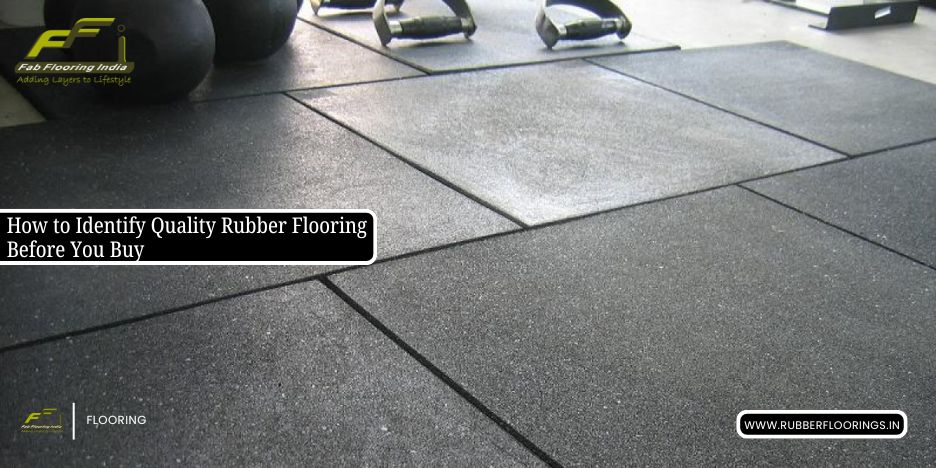
How to Identify Quality Rubber Flooring Before You Buy
Rubber flooring is one of the most durable and versatile flooring solutions available today. It is widely used in gyms, fitness centers, schools, playgrounds, commercial buildings, industrial facilities, home gyms, and sports complexes because of its strength, safety, and long lifespan.
However, not all rubber flooring is made to the same standard.
At first glance, many rubber flooring products may look similar, but their performance can vary significantly depending on the quality of the raw materials, manufacturing process, density, thickness, and overall construction.
Choosing low-quality rubber flooring may save money initially, but it often results in faster wear, higher maintenance costs, poor appearance, and early replacement.
This guide explains how to identify quality rubber flooring before you buy, helping you make an informed decision and invest in flooring that delivers long-term value.
Why Rubber Flooring Quality Matters
Rubber flooring is designed to withstand demanding environments, but only when it is manufactured using high-quality materials.
Premium rubber flooring offers:
- Longer lifespan
- Better shock absorption
- Improved slip resistance
- Higher durability
- Easier maintenance
- Better resistance to wear and tear
Low-quality flooring, on the other hand, may develop problems such as:
- Surface cracks
- Compression marks
- Edge curling
- Strong odor
- Color fading
- Poor grip
Choosing the right product from the beginning helps avoid these issues.
Understand the Type of Rubber Flooring
The first step is understanding what type of rubber flooring you are buying.
SBR Rubber Flooring
SBR (Styrene-Butadiene Rubber) flooring is widely used for:
- Commercial gyms
- Home gyms
- Fitness centers
- Weight training areas
It offers excellent durability and good value when manufactured correctly.
EPDM Rubber Flooring
EPDM (Ethylene Propylene Diene Monomer) flooring is commonly used for:
- Playgrounds
- Outdoor fitness areas
- Walking tracks
- Decorative gym flooring
It offers:
- Better UV resistance
- Excellent color stability
- Superior weather resistance
Virgin Rubber Flooring
Virgin rubber flooring is made from new rubber rather than recycled materials.
Benefits include:
- Consistent quality
- Low odor
- Excellent flexibility
- Long service life
Although more expensive, it is suitable for premium applications.
Check the Flooring Density
Density is one of the most important indicators of quality.
Many buyers compare only the thickness of flooring, but density has a much greater impact on durability.
High-Density Rubber Flooring
Provides:
- Better load-bearing capacity
- Less compression
- Longer lifespan
- Improved stability
Suitable for:
- Commercial gyms
- Heavy equipment
- High-traffic areas
Low-Density Rubber Flooring
May:
- Compress easily
- Lose shape over time
- Wear faster
High-density flooring generally performs much better under continuous use.
Don't Judge Quality by Thickness Alone
Many people assume thicker flooring is automatically better.
This is not always true.
For example:
A 15mm low-density rubber tile may perform worse than a 10mm high-density rubber tile.
Instead of focusing only on thickness, evaluate:
- Density
- Material quality
- Manufacturing standards
Thickness should always match the intended application.
Inspect the Surface Finish
A quality rubber flooring product should have a consistent and uniform finish.
Look for:
- Smooth edges
- Even texture
- Uniform color
- Strong bonding between rubber granules
Avoid flooring with:
- Loose particles
- Rough or uneven edges
- Surface cracks
- Visible gaps
A poor finish often indicates lower manufacturing quality.
Check the Material Bonding
Rubber flooring is made by binding rubber granules together.
The quality of this bonding determines the flooring's strength.
Signs of good bonding include:
- Compact structure
- Minimal loose granules
- Strong surface integrity
Poor bonding may result in:
- Granules coming loose
- Surface deterioration
- Faster wear
Evaluate Shock Absorption
One of the biggest advantages of rubber flooring is its ability to absorb impact.
Good shock absorption helps:
- Protect joints
- Reduce fatigue
- Minimize equipment vibration
- Protect subfloors
If possible, test a sample by applying pressure or dropping a small weight.
High-quality flooring should compress slightly and recover quickly without permanent marks.
Test Slip Resistance
Safety is an important consideration.
Quality rubber flooring should provide:
- Good traction
- Stable footing
- Reliable grip
This is especially important in:
- Gyms
- Playgrounds
- Sports facilities
- Industrial workspaces
A textured surface usually provides better slip resistance.
Check for Strong Chemical Odors
A strong smell can indicate poor-quality materials or manufacturing.
Premium rubber flooring may have a slight odor initially, but it should not produce a strong chemical smell.
Persistent odor may indicate:
- Low-grade recycled materials
- Poor curing process
- Inferior binders
Choosing low-odor flooring improves indoor air quality, especially in enclosed spaces.
Verify Moisture Resistance
Rubber flooring often comes into contact with:
- Sweat
- Water spills
- Humidity
- Cleaning solutions
Quality flooring should resist moisture without:
- Swelling
- Delamination
- Surface damage
This is particularly important in gyms and sports facilities.
Assess Wear Resistance
High-quality rubber flooring should maintain its appearance despite heavy use.
Look for flooring that resists:
- Scratches
- Abrasion
- Surface wear
- Equipment movement
Good wear resistance means lower maintenance costs and a longer service life.
Ask About Load Capacity
If the flooring will support heavy equipment, ask the supplier about its load-bearing capability.
Quality rubber flooring should comfortably support:
- Treadmills
- Squat racks
- Weight machines
- Dumbbell racks
- Functional trainers
High-density flooring distributes weight more effectively and reduces permanent indentations.
Understand the Manufacturing Process
Manufacturing quality plays a major role in flooring performance.
Ask questions such as:
- What type of rubber is used?
- Is the flooring made from recycled or virgin rubber?
- What binder is used?
- How is the flooring cured?
Reliable manufacturers are usually transparent about their production standards.
Check Dimensional Accuracy
Quality flooring should have consistent dimensions.
Measure or inspect:
- Thickness
- Length
- Width
Uneven dimensions can create installation problems and visible gaps.
Consider UV and Weather Resistance
If the flooring will be installed outdoors, verify that it is resistant to:
- UV rays
- Rain
- Temperature changes
EPDM rubber flooring is generally the preferred choice for outdoor environments.
Evaluate Maintenance Requirements
Good rubber flooring should be easy to maintain.
Routine care should involve:
- Sweeping
- Vacuuming
- Damp mopping
Flooring that requires complicated maintenance increases long-term costs.
Check the Warranty
A quality manufacturer typically provides a product warranty.
Although warranty periods vary, they indicate the manufacturer's confidence in the product.
Always ask:
- What does the warranty cover?
- How long is the warranty?
- Are there installation conditions?
Buy from a Trusted Supplier
Choosing a reputable supplier is just as important as choosing the product itself.
A reliable supplier should provide:
- Product specifications
- Technical guidance
- Installation advice
- After-sales support
Experienced suppliers can also recommend the right flooring for different applications.
Questions You Should Ask Before Buying
Before making a purchase, ask:
- What type of rubber is used?
- What is the flooring density?
- Is it suitable for commercial use?
- Is it moisture resistant?
- Is it UV resistant?
- What is the recommended application?
- What is the expected lifespan?
- Does it require professional installation?
The answers will help you compare products more effectively.
Common Mistakes Buyers Make
Avoid these common mistakes:
- Choosing flooring based only on price
- Focusing only on thickness
- Ignoring density
- Buying from unknown suppliers
- Not checking the product finish
- Skipping warranty details
- Using indoor flooring outdoors
These mistakes often result in higher long-term costs.
Why Quality Rubber Flooring is a Better Investment
Although premium rubber flooring may cost more initially, it provides better long-term value through:
- Longer service life
- Lower maintenance costs
- Better safety
- Improved appearance
- Higher durability
- Reduced replacement frequency
The total cost of ownership is often much lower than choosing cheaper alternatives.
Final Verdict
Quality rubber flooring is identified by more than just its appearance.
The best products combine:
- High-density construction
- Durable materials
- Strong bonding
- Excellent shock absorption
- Slip resistance
- Moisture resistance
- Professional manufacturing
Taking the time to evaluate these factors helps you choose flooring that performs reliably for years.
Conclusion
Buying rubber flooring is a long-term investment, and selecting the right product can make a significant difference in safety, durability, maintenance, and overall performance.
Instead of focusing only on price or thickness, evaluate the material quality, density, finish, and manufacturing standards. A well-made rubber floor will not only last longer but will also provide a safer, cleaner, and more professional environment.
Whether you're building a home gym, commercial fitness center, playground, or industrial workspace, investing in quality rubber flooring is one of the smartest decisions you can make.