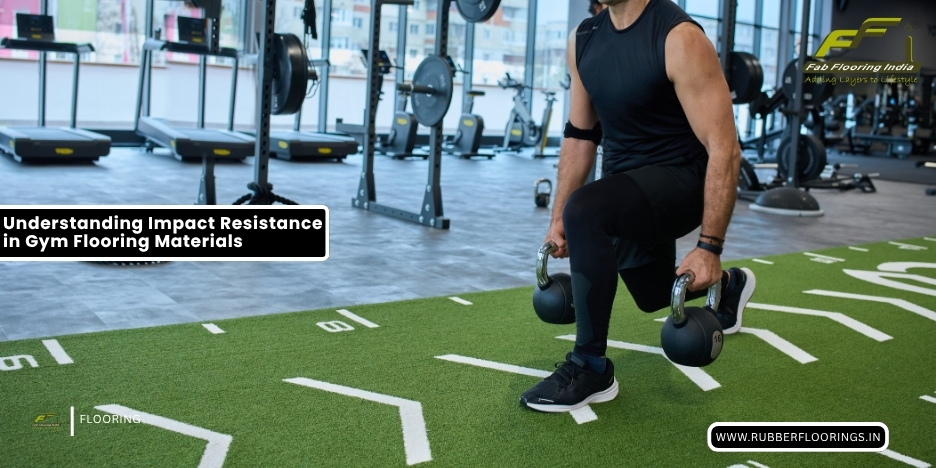
Understanding Impact Resistance in Gym Flooring Materials
When setting up a gym—whether it’s a home workout space, commercial fitness center, or professional training facility—one of the most critical yet often misunderstood factors is impact resistance in gym flooring.
Most people focus on thickness or appearance, but the real performance of gym flooring depends on how well it can handle impact from weights, movement, and equipment.
Impact resistance is what determines whether your flooring will last for years—or fail within months.
In this detailed guide, we’ll break down what impact resistance means, why it matters, how different materials perform, and how to choose the right flooring for your gym.
What Is Impact Resistance in Gym Flooring?
Impact resistance refers to a flooring material’s ability to:
- Absorb force from dropped weights
- Distribute pressure evenly
- Prevent damage to both equipment and subfloor
- Maintain its shape after repeated stress
Simple Explanation
When you drop a weight:
- High impact → strong force hits the floor
- Good flooring → absorbs and spreads the force
- Poor flooring → transfers force directly to the floor
Impact resistance is the difference between protection and damage.
Why Impact Resistance Matters in Gyms
1. Protects Your Subfloor
Without proper impact resistance:
- Concrete cracks
- Tiles break
- Wooden floors get damaged
Repairing floors is expensive.
2. Prevents Equipment Damage
Dropped weights can damage:
- Barbells
- Dumbbells
- Plates
Impact-resistant flooring acts as a cushion.
3. Reduces Injury Risk
High impact can strain:
- Knees
- Ankles
- Lower back
Shock-absorbing flooring reduces joint stress.
4. Improves Durability
Flooring with good impact resistance lasts longer.
It can handle repeated stress without breaking.
How Impact Force Works in a Gym
To understand impact resistance, let’s look at physics.
Example
When a 50 kg weight is dropped:
- The impact force can exceed 150–200 kg
- The force increases with height and speed
Without Proper Flooring
- Force goes directly into the floor
- Causes damage
With Impact-Resistant Flooring
- Force is absorbed
- Energy is distributed
This protects everything involved.
Key Factors That Affect Impact Resistance
1. Material Type
Different materials perform differently.
Rubber
- Excellent impact resistance
- Flexible and durable
EVA Foam
- Soft but less durable
- Compresses easily
Vinyl/PVC
- Low impact resistance
- Not ideal for heavy workouts
Rubber is the best overall option.
2. Density (More Important Than Thickness)
Many people think thicker = better.
But density is more important.
High Density
- Stronger
- Better shock absorption
Low Density
- Softer
- Less durable
Always choose high-density flooring.
3. Thickness
Thickness affects impact absorption.
Recommended Thickness
- 6mm–8mm → Light workouts
- 10mm–12mm → General gym use
- 15mm–20mm → Strength training
- 20mm+ → Heavy lifting
Thicker flooring = better protection (when needed).
4. Installation Quality
Poor installation reduces performance.
Issues
- Uneven surface
- Gaps between tiles
- Loose flooring
Proper installation is essential.
Types of Gym Flooring Based on Impact Resistance
Rubber Flooring (Best Choice)
Rubber flooring is widely used because of its:
- High impact resistance
- Durability
- Flexibility
Best For
- Weightlifting
- CrossFit
- Commercial gyms
Heavy-Duty Rubber Mats
Thicker and stronger than standard flooring.
Best For
- Deadlift zones
- High-impact areas
EVA Foam Mats
Soft but not suitable for heavy use.
Best For
- Yoga
- Stretching
Artificial Turf
Moderate impact resistance.
Best For
- Functional training
Real-Life Comparison
Cheap Flooring
- Low density
- Poor impact absorption
- Quick damage
High-Quality Rubber Flooring
- High density
- Strong impact resistance
- Long lifespan
The difference is huge.
How to Test Impact Resistance
Drop Test
Drop a weight and observe:
- Does it bounce too much?
- Does it leave a dent?
Compression Test
Press the surface:
- Good flooring returns to shape
- Poor flooring stays compressed
Feel Test
- Solid and heavy = high quality
- Light and soft = low quality
Always test before buying.
Common Problems Without Impact Resistance
Cracked Floors
Hard surfaces break under pressure.
Equipment Damage
Weights and machines wear out faster.
Injuries
Higher risk of joint stress and accidents.
Noise Issues
Loud impact sounds and vibrations.
All of these can be avoided with proper flooring.
Importance of Zoned Flooring
Not all areas need the same impact resistance.
Example
- Cardio → Low impact
- Strength → Medium impact
- Deadlift → High impact
Use different flooring thickness for each zone.
Impact Resistance in Dubai and India
In regions like Dubai and India:
Dubai
- High temperatures
- Commercial gyms
- Heavy usage
India
- Mixed usage
- Budget considerations
High-quality rubber flooring works best in both regions.
Long-Term Benefits of Impact-Resistant Flooring
Durability
Lasts 10–15+ years.
Cost Savings
Reduces repairs and replacements.
Safety
Lower risk of injuries.
Performance
Better workout experience.
Expert Tips for Choosing Impact-Resistant Flooring
Focus on Density First
Not just thickness.
Choose Rubber Flooring
Best overall performance.
Use Zoned Layout
Different areas = different needs.
Avoid Cheap Materials
Low cost = high long-term expense.
Final Verdict
Impact resistance is one of the most important features of gym flooring.
Without it, you risk:
- Equipment damage
- Floor damage
- Safety issues
With it, you get:
- Protection
- Durability
- Better performance
Conclusion
Understanding impact resistance helps you make smarter decisions when choosing gym flooring. It is not just about how the floor looks—it’s about how it performs under real conditions.
By selecting high-quality, impact-resistant flooring, you protect your investment, improve safety, and create a professional gym environment.
The right flooring doesn’t just support your workouts—it protects everything beneath it.