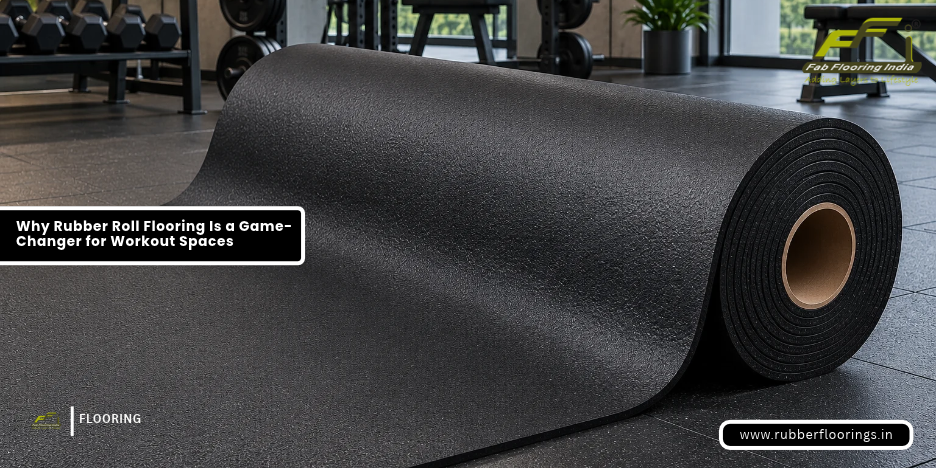
Why Rubber Roll Flooring Is a Game-Changer for Workout Spaces
A good workout starts with the right equipment, but the floor beneath your feet matters just as much. Slippery surfaces, hard concrete, and poor shock absorption can make exercise uncomfortable and increase the risk of damage to your gym floor.
Rubber Roll Flooring offers a practical solution for gyms, fitness studios, and home workout spaces. It provides a durable, cushioned surface that handles regular workouts while helping protect the subfloor from weights, equipment, and daily foot traffic.
What Is Rubber Roll Flooring?
Rubber roll flooring is a flexible flooring material supplied in continuous rolls rather than individual tiles. It is commonly used in fitness centres, commercial gyms, strength-training zones, and home gyms because it creates a relatively seamless surface with fewer joints.
Depending on the product, rubber rolls can be manufactured from recycled rubber, SBR rubber, or other rubber compounds. The right option depends on your budget, workout intensity, required thickness, and installation environment.
Available Thickness Options
Choosing the correct thickness is essential for comfort, stability, and floor protection.
- 3–4 mm: Suitable for light exercise areas and certain low-impact fitness applications.
- 5–6 mm: A practical option for general fitness studios and light workout spaces.
- 8–10 mm: Often suitable for standard gym areas with regular foot traffic and moderate equipment use.
- 12–15 mm or thicker: May be appropriate for strength-training areas where heavier equipment and greater impact protection are required.
These are general guidelines, not universal specifications. Always consider the equipment load, type of exercise, subfloor, and manufacturer's recommendations before selecting a thickness.
Material and Density
Rubber roll flooring is commonly manufactured using different rubber compounds.
SBR rubber: Styrene-butadiene rubber is widely used for general gym flooring because of its durability and practical cost.
EPDM rubber: Ethylene propylene diene monomer rubber is valued for its weather resistance and colour options. EPDM may be used in specific flooring formulations or as part of a blended product.
Recycled rubber: Recycled rubber materials can offer a cost-effective flooring solution for busy fitness environments.
Density also matters. Higher-density flooring can provide a firmer, more stable surface, while the cushioning and impact performance depend on the complete product construction. Compare technical specifications rather than selecting a roll based on density alone.
Surface Options
Rubber rolls are available in different finishes to suit the appearance and function of your workout space.
- Smooth finish: Creates a clean, simple appearance and can be suitable for many indoor gym environments.
- Textured finish: Offers additional surface grip, depending on the texture and product design.
- Speckled finish: Combines coloured rubber particles with a base material for a distinctive gym-floor appearance.
- Custom colours: Available in selected products for branded fitness studios and coordinated interiors.
Choose a surface that balances traction, cleaning requirements, comfort, and the activities performed in the space.
Applications of Rubber Roll Flooring
Rubber rolls work well across several fitness environments, including:
- Commercial gyms and fitness centres
- Home gyms and personal training rooms
- Cardio and functional training zones
- Yoga and general exercise studios, where the product's firmness is suitable
- Equipment areas with treadmills, exercise bikes, and weight machines
- Strength-training spaces, with an appropriately rated product
For Olympic lifting or repeated heavy weight drops, choose flooring specifically rated for that impact level. Standard rubber rolls may not provide enough protection on their own.
Key Benefits of Rubber Roll Flooring
1. Helps Protect the Subfloor
Rubber flooring creates a protective layer between gym equipment and the underlying floor. The level of impact protection depends on its thickness, composition, and intended use.
2. Supports Comfortable Workouts
The resilient surface can make standing exercises and regular gym activities more comfortable than working directly on hard concrete.
3. Handles Regular Foot Traffic
Quality rubber rolls are designed for repeated use in demanding environments. This makes them a practical option for busy gyms and fitness studios.
4. Creates a Cleaner, More Uniform Appearance
Because rubber rolls cover larger areas, they can reduce the number of joints compared with flooring installed in small individual pieces.
5. Simplifies Routine Maintenance
Regular sweeping and damp mopping with a manufacturer-approved cleaner can help keep the surface clean. Proper maintenance also helps preserve its appearance over time.
Pro Tip: Before buying rubber roll flooring, check the thickness, density, slip resistance, odour characteristics, and impact rating. The cheapest roll may not be the most suitable option for your workout area.
Rubber Roll Flooring Installation
Correct installation helps prevent movement, curling, and uneven joints.
- Prepare the subfloor: Ensure the surface is clean, dry, level, and free from dust or grease.
- Measure the area: Calculate the required coverage and allow for accurate cuts and layout planning.
- Condition the material: Follow the manufacturer's instructions for acclimatisation before installation.
- Cut and position the rolls: Use appropriate tools to achieve neat edges and aligned seams.
- Secure the flooring: Use a compatible adhesive or approved installation method for the subfloor and intended application.
- Allow proper curing: Follow the specified curing time before placing equipment or reopening the gym.
Professional installation is advisable for large commercial gyms, heavy equipment areas, and floors requiring specialised adhesives.
Maintenance Tips for Longer Service Life
Keep your rubber flooring in good condition with a simple routine:
- Remove dust and loose debris regularly.
- Clean spills promptly to prevent staining or surface deterioration.
- Use a pH-neutral or manufacturer-approved cleaner.
- Avoid harsh chemicals that may damage the rubber.
- Inspect seams, edges, and high-use zones for wear or lifting.
- Use suitable protective pads beneath heavy equipment where recommended.
Expected Durability
The lifespan of rubber roll flooring depends on material quality, thickness, density, installation, cleaning practices, and workout intensity. Well-maintained products designed for their intended application can provide years of service, but no single lifespan applies to every gym.
For better long-term performance, select flooring based on the actual loads and activities rather than appearance alone. Regularly inspect areas exposed to heavy weights, moving equipment, and concentrated foot traffic.
Customization Options
Depending on the supplier and product range, rubber rolls may be available with different:
- Thicknesses and roll dimensions
- Colours and speckled patterns
- Surface finishes
- Rubber compositions and densities
- Edge and transition solutions
Custom options can help fitness businesses create a consistent look while selecting flooring that suits each workout zone.
Technical Specifications to Check
Before purchasing, request a product datasheet covering:
- Material composition
- Thickness and roll dimensions
- Density
- Hardness, where specified
- Slip-resistance performance
- Impact or shock-absorption test results, where applicable
- Abrasion and wear resistance
- Fire-performance classification, where required
- Installation and cleaning instructions
Always verify these details with the manufacturer because specifications vary by product.
Choose the Right Rubber Roll Flooring for Your Gym
The right rubber roll flooring can help create a more comfortable, durable, and professional workout environment. From material and thickness to surface finish and installation, every detail should match the needs of your space.
Looking for rubber roll flooring for a commercial gym, fitness studio, or home workout area? Explore the rubber flooring solutions at RubberFloorings.in and contact the team to discuss suitable options for your project.
Frequently Asked Questions
Is rubber roll flooring good for gyms?
Yes. Rubber roll flooring can be a practical choice for commercial gyms, fitness studios, and home workout areas because it provides a resilient surface and can help protect the underlying floor.
What thickness of rubber roll is best for a gym?
The best thickness depends on your activities and equipment. Thinner rolls may suit light exercise areas, while heavier strength-training zones may require thicker, impact-rated flooring.
Is rubber roll flooring better than rubber tiles?
Rubber rolls generally create fewer joints and a more uniform appearance. Rubber tiles can be easier to replace individually. The better choice depends on the space, installation needs, and expected impact.
How do you clean rubber roll flooring?
Sweep or vacuum loose debris, then damp mop with a compatible cleaner. Follow the manufacturer's instructions and avoid products that can damage the rubber.
Can rubber roll flooring support heavy gym equipment?
Many products can support gym equipment when installed correctly, but suitability depends on the equipment's weight, load distribution, and the flooring specifications. Check the manufacturer's load and impact guidance before installation.